Continuing the Conversation: Insights from Our Funder Learning Series
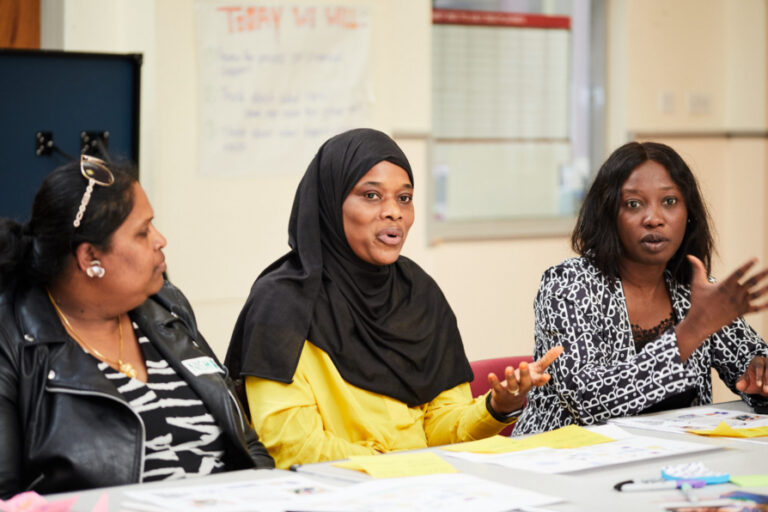
May 29, 2025As part of our ongoing commitment to sharing learning and strengthening practice, five funders convened on Thursday 22 May 2025 to continue the conversation on how we balance crisis response with longer-term systems change.
The session formed part of our Learning Circles journey, an ongoing effort to bring funders and the women’s sector together to reflect on how we can fund more effectively using a gender lens. It created a safe and reflective space to learn from frontline practice, explore shared challenges, and develop funding approaches that are both responsive and strategic.
We began with a light-touch icebreaker, asking: “If your funding was a superhero, what would its superpower be?” The creative responses revealed a shared commitment to adaptability, collaboration and long-term thinking. Some described their funding as elastic or stretchy, drawing inspiration from The Incredibles. Others likened theirs to the powerful nectar of a flower. This symbolised funding that is nurturing, generous and attuned to sector needs. One imagined their funding as a bridge-builder, able to connect crisis response with systems change, affectionately dubbed Captain Continuum. Whether through unrestricted funding or prioritising support for women and girls, the responses reflected a desire to be dynamic and thoughtful partners in a complex and shifting landscape.
The main discussion centred on how funders can better support both frontline delivery and systems-level change. Participants reflected on how external pressures such as austerity, the COVID-19 pandemic and the cost of living crisis continue to impact the pace of progress and the ability to demonstrate impact. These factors often slow momentum and make it harder to capture long-term change.
A recurring tension emerged around how to fund immediate needs without losing sight of systemic goals. Crisis support is often easier to evidence, while systems change is more complex, slower to show results and difficult to measure. This is particularly the case when the aim is to shift behaviours, power or policy.
Participants acknowledged the challenge of remaining flexible in how we fund and report, while still gathering the data needed to show why this work matters. There was a shared view that evaluation must evolve from a compliance exercise to a genuine opportunity for learning. A key question was raised: what language and practice can we adopt to uphold the discipline of tracking and showing what has been achieved, without placing unnecessary burden on organisations?
Understanding the specific needs and make-up of grant partners, particularly grassroots or specialist organisations such as women’s centres, was noted as essential. Funders spoke about the importance of providing flexible funding to help partners collect quality data in ways that are manageable and meaningful to them. Smallwood’s work has shown that tailoring funding approaches to the realities of women’s organisations not only builds trust but enables more meaningful engagement and long-term outcomes.
The conversation also touched on the evolving role of funders. One foundation shared how its board is actively involved in the grant-making process. This includes attending visits, participating in panels and engaging in workshops to hear directly from grantees. This approach helps strengthen relationships and build deeper understanding of the realities faced by funded partners. Many in the group reflected on this question: what is the role of a funder in this work, and how might that role continue to shift in response to the needs of the sector?
The group explored how we might fund in ways that enable partners to influence local systems. Suggestions included investing in capacity building, making connections between organisations and supporting collective action. It was also acknowledged that not all organisations want to be at decision-making tables. Part of the funder’s role is to recognise and respect that. As a convenor, Smallwood is particularly interested in how funders can share power more intentionally while remaining responsive to different organisational ambitions and capacities.
There was strong agreement on the need for funders to resource themselves too. This could be through learning partners, peer networks or additional staff capacity. Supporting more time for strategic thinking within funded organisations was also seen as vital, especially when their work is designed to shift systems.
Another key area of discussion was how to ensure smaller grassroots or specialist organisations are not left behind in efforts to drive systems change. This includes starting with a clear assessment of an organisation’s size and capacity, and ensuring support is tailored accordingly. Funders shared examples of offering different funding programmes suited to organisations of varying scale, and working with second-tier organisations to help build the capacity of smaller groups. These discussions align closely with Smallwood’s goal of making funding more inclusive and better suited to the strengths and limitations of women-led organisations.
During the open advice roundtable, one funder invited feedback on a new funding programme in development aimed at supporting a partnership of organisations. The group offered a number of insights.
- Invest in early-stage network development
- Plan for how partnerships will operate when things get difficult
- Consider how to properly resource the time and effort required to work in partnership
- Recognise that collaborative relationships often exist before any funder becomes involved
A thoughtful reflection emerged around the idea of funders acting as critical friends. Trusted partners who can offer constructive challenge, ask difficult questions and support organisations to reflect and grow.
These sessions continue to reaffirm our belief that learning alongside others, honestly and without hierarchy, is vital to developing funding practices that are both equitable and effective.
If you would like to join the conversation or share your reflections, please email: rutendongwena@smallwoodtrust.org.uk
We look forward to continuing to learn together.